Tuesday, September 25, 2012

Only govt can help stop piracy, Country manager Microsoft


Despite efforts made by the private sector to end the perennial problems in the country earnings that should accrue to the country would continue to remain in the hands of pirates and their accomplice, if government did not step in.
Onyeje
Country manager, Microsoft Nigeria, Mr. Emmanuel Onyeje told ICT.BizAfrica that enforcement and raiding of the hideout where most works are being pirated in the country is strictly a government affair.
According to him, the private sector is not empowered by the law to enforce infringement on copyright laws and the raiding of the hideout of the pirates stressing that unless the problems are completely solved those who are expected to benefit from their works would continue to suffer in the mist of the plenty that they have.
He noted that most of the people that are involved in the activities of piracy are foreigner noting that a good number of them are Chinese who are they take advantage of the situation in the country to commit those crime.
“I am not a law maker and I am not empowered by the law to fight piracy, that is why I have always said that the Nigerian Copyright Commission (NCC) news more teeth to be a able to bite”, he said.
The Microsoft boss called for stronger anti-piracy laws in the country that are enforceable noting that government needs to engage intensive campaign against piracy to create awareness on the harm of piracy in the country.
He stated that most people do not even know that piracy is wrong explaining that what those who patronise pirated works, think is that they are only buying a cheap product.
He said some just want to have software in their PC when they buy it without even thinking that the software that is being loaded into the system is a pirated one.
He further disclosed that buying pirated software helps those who are involved in cyber crime to produce spam mail
Highlighting further some of the unseen dangers in pirated softwares, he said some cyber crime uses pirated softwares to hack into a bank system just like as it could be done with malware noting all they do is infect millions of PCs with pirated software, and then use millions of PCs to send that email out.
According to Onyeje, buying pirated software actually helps cyber criminal to hack into other network and commit all kinds of criminal activities noting that access to the genuine software sometimes leads to piracy.
He explained that when the right and genuine software hits the market and consumers are not able to get it buy, it gives room for the pirates to produce their own version.
While linking the increasing rate of piracy to the level of poverty in Nigeria and other parts of Africa, Asia and the Middle East, he said that the culture of buying used PCs have also given rise to the activities of piracy.
He therefore said there is the need to also do something about that just like as government is trying to bridge the digital divide they also need to bridge the gap between the rich and the poor suggesting that for those who do not use high-end phones and cannot afford PCs efforst should be made to get software into those phones.
On why Microsoft software are more pirated compared to applications like OpenOffice, he said that people cannot pirate it because it free adding that even software are that supposed to be free are bundled together and sold along with Microsoft software in one CD.
Although it is clear how long the activities piracy would remain, he however noted that to tackle it all stakeholders, including those in the publishing books and producing of movies and music business must be involved.
Investigation showed that piracy is not peculiar to Nigeria alone, for instance, piracy in Uk have assumed an alarming dimension.
In a study conducted by the BBC, which revealed that a UK artist Ed Sheeran topped the list of most pirated UK artist for the first half of 2012 also named Manchester as the  piracy capital of the UK.
The research said there were more illegal downloads per person in the city than any other in the country, followed by Nottingham and Southampton.
The statistics, from monitoring service Musicmetric, concluded that in the first half of 2012, UK users illegally shared over 40 million albums and singles.
An industry group said the data showed piracy "remains a significant problem".
The data, collected independently by Musicmetric and seen exclusively by the BBC, is believed to be the biggest analysis of its kind to be conducted.
It monitored the global activity of BitTorrent files - a method of obtaining files by downloading from many users at the same time.
The data's release came as measures to attempt to curb illegal downloading began to take hold, such as the blocking of popular piracy websites and the relegation and removal of search results from Google.
Musicmetric's findings said that singer Ed Sheeran was the most pirated act in the UK for the first half of 2012, followed by hip-hop duo Rizzle Kicks and Barbadian megastar Rihanna.
The data suggested that Ed Sheeran's 2011 album + (Plus) was illegally downloaded an average of 55,512 times every month, and was the most popular download in over 460 towns and cities in the UK.
Globally, the research suggested that the UK is a significant player on the world stage as a country of illegal music downloaders.
The country was placed second in the world in terms of pure volume of illegal activity, with Musicmetric logging 43,263,582 downloads in the first six months of this year. The US topped the list, with 96,681,133 downloads tracked in the same period. Italy (33,158,943), Canada (23,959,924) and Brazil (19,724,522) made up the remainder of the top five.
Rihanna's latest album - Talk That Talk - was found to be the world's most pirated release - Musicmetric tracked 1,228,313 downloads for the title in the first half of 2012.
In its analysis of the UK's data, Musicmetric has estimated that 345 million individual tracks made up the torrent files downloaded by British music fans.

According to the British Phonographic Industry (BPI), the UK's music industry body, the figures were having a "significant effect on investment in new music".
"According to their data, there are more illegal downloads in the UK still than there are legal purchases," the BPI's chief executive Geoff Taylor told the BBC.
"[It] compares to about 240 million tracks that were sold legally. A lot of people are getting very rich from stealing other people's things.
"That's wrong, and we think that musicians deserve to be paid for what they do, just like everyone else."
However, Loz Kaye, leader of the Pirate Party UK  who will be attempting to become Manchester's next MP in the next election  said the complaints of record labels is "protectionism".
"We need to remove the barriers for actual artists to connect with their business and their fans," he told the BBC.
"The truth is, why [music industry figures] are complaining so much is that with a properly functioning internet, and a properly functioning economy, the big players are no longer necessary."

Monday, August 13, 2012

Investment in Youth ICT Skills Critical for Socio-Economic Devt, says American Firm


L-R:Regional Manager, West Africa Electronic Medicines Compendium (EMC), Rasheed Ola Jimoh; Marketing Manager, Haidi Nosseir; Regional Director, Emerging Africa, Lebanon and Zain Global, Fady Richmany Senator Kayode Ashafa, at Presentation/Donation of Computers and Lab Sets to Iwerekun Community Senior  Secondary School, Lakuwe, Ibeju Lekki, Lagos. PHOTO:SULEIMAN HUSAINI
A critical factor that would create social economic change in Nigeria is investment in ICT development of youths in the country, an America firm, EMC Corporation has observed.
To this end, the company has kick-off projects across the country that would fast-track its dream of using the youth population to drive social economic change in the country.
EMC Corporation is the world’s leading developer and provider of information infrastructure technology and solutions that enable organizations of all sizes to transform the way they compete and create value from their information.
In interview with journalist in Lagos, Regional Director for Emerging Africa, EMC Mr. Fady Richmany, said, “As a leading global IT company, we recognise that the long-term viability of our business depends on educated and prosperous societies from which we can attract the best employees to serve our customers and partners.
As a result, he said  EMC kick-off the “Youth IT Literacy Project” in Lagos  with the provision of  an IT laboratory and computers for  the Iwerekun Community Senior Sec School in the Lakowe area of Ibeju Lekki in Lagos.
According to him, EMC employees in their volunteer programme has offered to install donated computers that would help to improve students’ access to technology noting that EMC is bringing the programme to Nigeria as part of its contribution to driving positive social change in the Nigeria.
He noted that the project in Ibeju Lekki is also part of EMC’s commitment to advancing socio economic empowerment within the global communities in which it operates saying that over the last several years, EMC has launched similar social projects across Africa with the aim of facilitating easy access to information and communication technologies (ICT) and promoting education in under-served communities.
Richmany explained that in 2011, EMC employees in the region volunteered to help renovate a school in Ghana, while in 2010 EMC continued its collaboration with the Zephaniah Owidi Odongo Memorial Foundation (ZOO MF) to support the ZOO MF Rural ICT Project by building several computer labs in Kenyan schools and community centers and while employees donated their used, refurbished computers to furnish them.
The drive force behind these initiatives he noted were based on the EMC recognition of the importance of ICT and education in empowering youth and in driving socio-economic development, stating that EMC is committed to driving real transformation in Nigeria to complement its growing business footprint in the country.
He also said the company views this project as the first of many future community investments focused on ICT enablement in Nigeria.
EMC’s Regional Manager for West Africa, Mr. Rasheed Ola Jimoh, further explained that the donation of computers and construction of an EMC-sponsored computer laboratory is part of the company’s continuing efforts in the region to improve young peoples’ literacy, as well as their access to and use of technology. 
“We hope that the “Youth IT Literacy Project” will be an important catalyst for the development of young Nigerians as ICT skills are essential to their professional advancement and success.
“Young Nigerians starting from secondary school are leveraging social media to connect, communicate, develop and innovate. At EMC, we are pleased to initiate the first of several such projects in Nigeria and we look forward to extending this initiative further in the near future”, he said.
He disclosed that EMC has sign-up with some selected universities in Nigeria to get the best graduating students to be part of the EMC family adding that the company is also partnering government to raise the profile of technology in government.
According to him, EMC is passionate about accelerating the transformation journey of firms by enabling IT departments to store, manage, protect and analyse their most valuable asset, information, in a more agile, trusted and cost-efficient way.
While commending the company, which has been in Africa in the past four years, Senator Gbenga Ashafa, the lawmaker representing the Lagos East Senatorial District in Lagos, said that the “Youth IT Literacy Project” supported by EMC will complement existing facilities for easy and cost effective access to knowledge for youth in the area. 
He said, “We are excited about the future prospects for our youth and view this initiative as a driving force to improve the technology skills desperately needed by our locally-based corporate organizations.  This is local capacity building at its best”.

Technology Firm Partners FG on Green Energy


As part of efforts to tackle the lingering electricity power problem in the country, PNN, a pan-African technology service provider has entered a four-year partnership with the National Power Training Institute of Nigeria (NAPTIN) to provide renewable energy capacity building within the country.

The company with interest in the development of the communications and power sectors in nine African countries will work with the institute to standardise training quality in Nigeria as part of the Federal Government’s power reform programme.
To deliver under this collaboration, PNN will work with the Renewable Energy Technology Institute (RETI) to develop and deliver programmes that meet international standards.
RETI is expected to work with NAPTIN to consolidate and standardize training across Nigeria for all persons, establishments and institutions that would participate in the country’s growing renewable energy sector; and will award three levels of national certification, which will qualify participants to work anywhere in the power industry, globally.
NAPTIN certification will qualify its recipients to work anywhere in the renewable energy sector, in Nigeria and all over the world. RETI will conduct the training programme in conjunction with NAPTIN staff as well as international partners, who will also deliver training under the institute’s train-the-trainer curriculum.
Speaking at press conference, Engr. Reuben Okeke, the director-general and CEO of NAPTIN, said, “NAPTIN’s choice of PNN was mainly based on PNN’s clear understanding of the requirements for improving standards of training for all personnel in the renewable energy sector, as well as standardizing knowledge across the board, at all levels of participation. 
“PNN, being an accredited partner of the Federal Government’s renewable energy programme, has been chosen to work with us to fast track the important renewable energy training component of our mandate.”
He added, “The need to ensure we provide renewable training capacity will prevent the nation from further plunging her resources into failed renewable energy programmes that are being implemented across the country by various federal and state government MDAs.
“We need to ensure that all staff involved in designing, implementing and maintaining renewable energy installations nationwide not only receive proper training, but also get accredited and certified to prevent this failing.”
Professor Olurinde Lafe confirmed that the NAPTIN/RETI training programme is also a key component of PAWA 774, a private sector development project that aims to provide green energy to each of Nigeria’s 774 local government areas. 
PAWA 774 delivers renewable electricity via a smart-grid, powered by 100KW renewable energy power plants in community clusters. Each of these power plants will make up PAWA 774’s 10MW per LGA target, to be met over the next 5 years. All PAWA 774 employees will be trained in all aspects of renewable energy supply, operations and management, following which they will become NAPTIN-certified to participate in the power sector, anywhere in the world.
RETI will provide training in all areas of renewable energy supply, operations and management, including the installation, operation and maintenance of solar PV, wind, biomass and hydro-power systems.

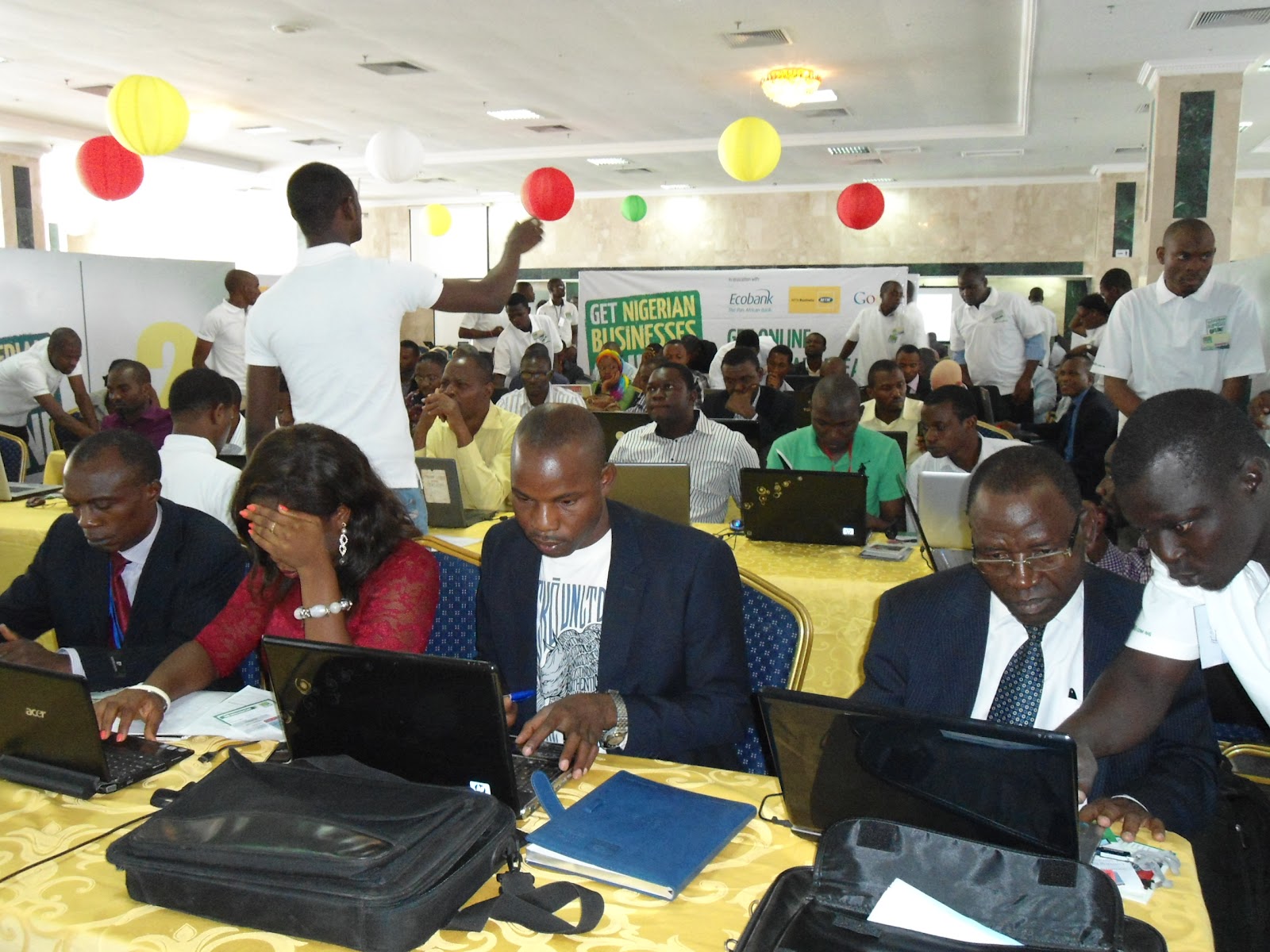
500 SMEs Grab Online Presence

Google GNBO Training in Lagos

An initiative to strengthen the online presence of 25,000 small Nigerian businesses may just be another breakthrough that will fast-track government efforts of ensuring the growth and development of small business in the private sector of the economy.
The initiative, known as ‘Succeed Online’, which has since commenced with Lagos State, involves the training of 500 business owners on how to better use the internet to reach more customers, and thereby achieve the goals of their businesses.
Speaking with the ICT & BizAfrica  over the weekend on the initiative, which would last until September 2012, Marketing Manager, SME Products, Google Nigeria, Bunmi Banjo disclosed that a major challenge facing online small businesses in Nigeria is lack of focus stressing that they run so many things at the same time and such it is difficult to understand their business.
According to her, using one website for several lines of business does not help for the growth of the several lines of business, noting that at the one visit to a website, the visitor should be able to known what the website is all about.
Banjo stated that the goal of the ‘Succeed Online’ training series is to educate small and medium business owners on crucial tips that would help them boost the impact of their online presence.
She explained that while having a website gives businesses an opportunity to showcase their goods and services, they can further benefit from a comprehensive online presence which include good use of social media, listings, blogs etc.  These tools are available to them at no cost.
She recalled that the “Succeed Online” initiative, which is a part of the Get Nigerian Businesses Online program (GNBO) launched in September 2011 has so far enabled over 25,000 SMEs in Nigeria to build their own websites for free noting that the training for 500 business owners is an educational series by Google to help them understand how to manage a wide range of internet tools that can take their businesses to the next level.
According to her, the GNBO program is a joint initiative by Google and partners such as Ecobank to help SMEs create their first websites and help them make the most of the opportunities offered by the Internet. 
Training session, she said will cover areas such as how to use platforms such as Google Trader to list various products and services for immediate sale; how to use social media and YouTube videos to interact with customers and get valuable feedback for improving their businesses and how to use Google’s ‘Insight for Search’ to improve the content of their websites.
While expressing the dismay over the low level of Nigerian content on the internet, she said part of its Google’s role in the country is to build the online ecosystem of the nation.
She added that Google wants to make the internet to be part of the everyday life of Nigerians stating that participants of the Succeed Online program are current GNBO website owners who have expressed interest in enhancing their online presence. 
Banjo noted that while these sessions are currently offered to GNBO website owners only, there are many tips and tricks on improving websites and building an effective presence on the internet can be found by doing a simple online search.
One of such companies, which the GNBO has helped boost its online is Interiors by Anora, a company devoted to creating beautiful interiors that reflect the client’s personal taste and style.
Nora Azubuike who founded the company in 2004 said, "Getting online for Interiors by Anora has meant that we are now one of the players in the global marketplace.  We now have the internet presence to reach customers both inside and outside Nigeria"
Acican Investments Limited, a wholly owned indigenous private limited liability company that provides a wide range of high quality products and services on Information Technology, Communication, Procurements, Management Consultancy & Allied Services, Internet & Information Marketing, Printing and Publishing has equally benefitted from the GNBO project.
Its chairman of, Chief Aci Blankson, said, "Getting online has really taken my business to a different level.  I now have a virtual office, so whether I'm at my physical location or not, I am always present for my clients when I am online"1

Monday, July 16, 2012

New report predicts more doom for Nigerian CDMA's by year ending


MD/CEO, Visafone, Sailesh Iyer

There are strong convictions that the current dwindling fortunes of the Code Division Multiple Division Access (CDMA) will get worse by the end of the year 2012.
MD/CEO, Starcomms Plc, Logan Pather
The report, which is the property of Business Monitor International Limited(BMI) but made available to the ICT & Biz Africa by a privileged source, noted that the CDMA operators would continue to record subscriber net losses due to their inability to contend with the GSM operators in the current strong competition for customers loyalty in the industry.
According to the report, before the arrival of the GSM operators in 2001, the CDMAs then notably Multi-Links, Intercellular and Starcomms as well as NITEL had a free day adding that even as far as 2008 when the GSM operators were fully settled in the industry, the CDMA had a share increase of up to 10.9 per cent of the mobile market.
However, by 2009 the CDMA operators began to experience much slower growth, with the total number of CDMA customers growing by 25 per cent during the year while mobile customers numbered 7.565mn.
 BMI stated that the segment has been declining since early 2010 saying that during the financial year of 2010, the CDMA operators recorded total net losses of 1.463 million subscribers to reach 6.102 million subscribers.
The report further said that in 2011, they made another net loss of 1.501 million subscribers to bring the total subscribers base to 4.601 million at the end of December 2011 adding that the loss was equivalent to a 4.8 per cent share of the mobile market, the lowest level since mid-2008.
The report observed that the trend confirms the view of BMI that there is likelihood for consolidation in the CDMA market in the face of strong competition from their GSM mobile market rival.
BMI however said that the regulator has not provided explanation for the negative growth trend affecting the CDMA mobile sector.
"In the assessment of the BMI, the current situation of the  CDMA Operators suggest that even before they began experiencing negative customer growth in the second quarter of 2010, they were struggling to compete for customers with their GSM rival"
For instance, in 2011, only Visafone had a growth by recording a net addition of 45,000 subscribers bringing its subscriber base to 2.604 million, also in the first and third quarter it reported higher subscriber figures.
However, for Multi-Links and Zoom Mobile it was a very sad story as both experienced steeper customers losses in 2011 instead of a having additions. Multi-Links mobile customer base shrunk by a massive 51.8 per cent in 2001 to reach 701,304 subscribers at the end of 2011 compared to 1.44 million a year earlier.
A similar sad story was told by BMI of Zoom mobile, which recorded even steeper subscriber losses as its subscribers base contracted by 66.4 per cent during the same period to reach 315,619 subscribers.
For Starcomms, it began the year on a brightly with 8.2 per cent growth in the first quarter of 2011 but successive subscriber losses in the last three quarter of the year took its subscriber base to 980,109 at the end of 2011, down from 1.149 million a year earlier.
The report disclosed that sensing that their fortunes and stake in the industry wa a sharp decline, the CDMA began to adopt a network infrastructure sale and leaseback strategy to cut cost.
In August 2011 Visafone agreed to sell and lease back 459 telecoms towers to infrastructure company IHS Nigeria to whooping sum estimated at $67 million while Starcomms in December 2010 concluded a sale and lease back agreement with Swap Technologies and Telecoms for 407 of its 557 base station towers.
BMI noted that the terms of the agreement stated that the $81.4 million transaction means that Swap will take over the maintenance of the 407 towers, including the physical structures and power components.
However, the core network and radio components will remain under Starcomms ownership and control. The lease agreement is for an initial duration of 15 years and allows the CDMA operators full access to operate its network.
Though it was not clear what the money will be use for, it was however gathered that $67 million of the sale proceeds is meant to clear off a large chunk of bank debts while the rest will be for growth purpose.
A key aspect of Starcomms surviving strategy, Nigerian Compass gathered was the sack of top expatriate from the company in 2011.
Top on the list were its managing director of Mr. Maher Qubain, chief commercial officer, Mr. Tushar Maheshwari, head, brand management, Mr. Manish Singh and marketing director, Mr. Richard Gill.
In their place, a South African, Logan Pather was employed as managing director and chief executive officer to turn around the fortunes of the company, although the situation seems to have defiled all solutions resulting to the huge subscriber base loss recorded in 2011.
The only quoted CDMA operator on the Nigerian Stock Exchange, an annual general meeting slated for last month was put off without explanations after press invitation had gone out.
For Multi-Links its condition got worse in June last year when South Africa’s fixed-line incumbent Telkom said that it was stopping funding for loss making after it had spent $1.44 billion on the operator since 2007.
This was followed by a failed attempt to sell Multi-Links for $52 million to Visafone but the deal, which was agreed to in April 2011 was cancelled in June after a Lagos High Court ruled in favour of Helios Towers Nigeria regarding a $252 million suit against Multi-Links over a contract breach for infrastructures services.
Just like the other CDMA operators, BMI attributed their crisis to the harsh operating environment in the country saying that it expects Helios Towers to sell Multi- Links in the future and when that happens, the CDMA operators would be among the front-runners.

Monday, July 2, 2012

Fears over mobile phones, base stations emissions still a mirage


Although a large number of studies have been performed over the last two decades to assess whether mobile phones pose a potential health risk, no adverse health effects have been established as being caused by mobile phone use.
Also, research does not suggest any consistent evidence of adverse health effects from exposure to radiofrequency fields at levels below those that cause tissue heating.
It therefore seems that the fears exercised by most mobile phone users about the possible health implications are mere mirage.
Those were the submission made by foreign and Nigerian experts who gathered in Lagos last week to discuss the possible health implications of mobile phone use as well as base stations.
The experts who were from the World Health Organisation, Mobile Manufacturers Forum, GSM Association, International Commission on Non Ionizing Radiation Protection (ICNIRP),the Federal Ministry of Health and the Ministry of the Environment were drawn from the various fields of health, environment, ICT and National Assembly.
The conference, known as the First West African Conference on Electromagnetic Fields (EMF) was organised by the Nigerian Communications Commission (NCC) to elucidate research already conducted on the issue.
In an opening remark at the gathering, the Minister of Communications Technology, Mrs. Omobola Johnson who was represented by the Stakeholder Management Commission at the NCC, Mr. Okey Itanyi said that the conference was organised to help guide government in evolving of policy guidelines on the supposed health implication of the use of mobile phones and other electronic devices.
At the conference with the theme: “Harmonizing EMF Policy, Exposure Limits and Risk Communication in West Africa”, the minister said the government is mindful of the health condition of Nigerians and wants to get a position that Nigerians can use mobile phones without worry about its health implication.
According to her, the government is aware of the confusion, which the possible health impact of mobile phones has created in the country.
In a paper titled: “RF and Health: A WHO Perspective”, Team Leader Radiation Programme, Department of Public Health and Environment, Dr. Emilie van Deventer said radio frequency fields is not limited mobile phones and base stations saying that it does exist security scanners, emerging technologist, navigational/radar equipment as well as residential sources such as microwave oven and health facility like x-ray machines.
She noted that the WHO is aware of the increasing concern of people about EMF saying that the increasing EMF human exposure is due to electricity demand, medical, technologies and wireless devices.
She however stated that in response to societal worries, the WHO in 1996 created the WHO International EMF project, a multinational, multidisciplinary effort designed to create and disseminate information on human health risk from EMF.
While referring to a fact sheet of the WHO dated June 2011, she said, “Research does not suggest any consistent evidence of adverse health effects from exposure to RF fields at levels below those that cause tissue heating”.
Deventer added:research has not been able to provide support for a causal relationship between exposure to EMF and self-reported symptoms, or “electromagnetic hypersensitivity” (EHS).
According to her, “EHS is characterized by a variety of non-specific symptoms that differ from individual to individual,” saying “EHS has no clear diagnostic criteria and there is no scientific basis to link EHS symptoms to EMF exposure.”
She further disclosed that there are no increased risks of glioma, meningioma or acoustic neuroma with mobile phone use of more than 10 years noting that while there are no available data for long-term use, there indications of increased risk of glioma for heavy users.
As part of the WHO plan on dousing the fears of users on the radiation impact of mobile phones and base stations, she said the world body is in partnership with
international organizations, international, advisory committee, national authorities and collaborating centres
She said while evidence for other exposures such as base stations, wifi, and outcomes (other cancers) considered insufficient for any conclusion, studies on children is ongoing.
In his paper titled: “ICNIRP: Structure, Activitites, protection Standard”, Dr Paolo Vecchia of National Institute of Health, Rome, Italy and former Chairman of ICNIRP, said that “although there are deficiencies in the epidemiological work, the studies have yielded no convincing evidence that typical exposure levels lead to adverse reproductive outcomes or an increased cancer risk in exposed individuals”.
He however said a decision must be made whether the available evidence allows the
identification of an exposure hazard, that is an adverse health effect that is caused by an NIR exposure.
According to him, ICNIRP provides guidance and advice on the health hazards of non-ionizing radiation, develops international guidelines on limiting exposure to non-ionizing radiation that are independent and science based, provides science based guidance and recommendations on protection from non-ionizing radiation exposure.
He said it is the opinion of ICNIRP, that the scientific literature published since
the 1998 guidelines has provided no evidence of any adverse effects below the basic restrictions and does not necessitate an immediate revision of its guidance on limiting exposure to high frequency electromagnetic fields.
Director Europe, Middle East and Africa of Mobile Manufacturers Forum, Thomas Barmüller, while speaking on Mobile phones and Safety: International EMF policy Development said the Specific Absorption Rate (SAR) ensures that mobile phones are tested for compliance at the highest possible power level saying that the test rate is usually on the user manual.
According to him, mobiles only operate on the minimum power needed to make or maintain a call to extend battery life but this also reduces EMF exposure further adding that for but some people remain concerned, hands-free kit is recommended.
He however, noted that it’s not about additional or higher safety as all compliant mobile phones are equally safe stressing, “Science-based approach prevails as countries around the world have adopted ICNIRP limits” and that the ITU recommends that “if such limits do not exist, or if they do not cover the frequencies of interest, then ICNIRP limits should be used.”
He observed that the bill on EMF exposure limits discussed in National Assembly, which applies to both network infrastructure and handsets is based on the limits set by the International Commission on Non-Ionizing Radiation Protection (ICNIRP).
ECOWAS commissioner, Dr Raphael Koffi who spoke on the topic:  EMF Policy Survey in the ECOWAS region said that the commission has conducted an EMF exposure guidelines survey in 9 of the 15 ECOWAS Member States saying that the survey showed that all respondent countries have policies that have based their exposure limits on the International Commission for Non-Ionizing Radiation Protection (ICNIRP) guidelines.
He stated that few countries have set good practice targets while most countries have an appeals process.

3G takes the lead in internet access by 2017


Available statistics Ericsson has showed that come 2017, 85 percent of the world’s population would have internet coverage via 3G.
Presenting the result of the Ericsson’s Second Traffic and Market Report to Nigerian ICT journalist from Stockholm, Sweden, Head of Strategic Marketing and Intelligence, Patrick Cerwall said mobile broadband subscriptions are also expected to reach five billion in 2017, compared to one billion by the end of 2011.
He told the media last weekend that there would be close to nine billion mobile subscriptions, compared to six billion by the end of 2011 adding that Machine-to-machine subscriptions will add to this figure.
Reacting to questions to the issues of policy and regulations in the Nigerian telecoms industry, Governemnt and Industry Relations Manager Hub for Central and West Region Sub-Saharan Africa, Mr. Olaseni Ashiru there is the need for all stakeholders to sit down and harmonising their several roles in the industry.
He said there is a limit that corporate bodies like Ericsson can go, saying that what the industry needs is a holistic approach that would respect the roles of everyone in the industry.
According to him, every levels of government must see itself as part of the industry noting that if the industry is progressing that will bring more revenue to the levels of government.
Senior Vice President and head of Strategy, Ericsson, Mr. Douglas Gilstrap, said,  “Today, people see access to the internet as a prerequisite for any device. This mindset results in growing demand for mobile broadband and increased data traffic”. He noted that mobile telephone operators have recognize this business opportunity and are aiming to facilitate this growth by providing good user experience with fast data speeds through high capacity networks.
As a result, he said about “75 per cent of the HSPA networks worldwide have been upgraded to a peak speed of 7.2 Mbps or above and around 40 per cent has been upgraded to 21 Mbps.”
The  Ericsson also predicted that by 2017 half of the world’s population will be covered by LTE/4G networks while smartphone subscriptions move to about three billion in 2017 compared to 700 million in 2011.
The report observed that total mobile data traffic in on the  increase as figures between Q1 2011 and Q1 2012 data traffic doubled with prime driver being video while Smartphones will remain, a key data traffic driver. The mobile data traffic will grow by 15 times between 2011 and 2017.
The data in the report also showed variations between countries and regions. In the case of mobile net additions, China added the most subscriptions for a single country in Q1 2012 with 39 million, followed by India with 25 million. The Asia Pacific region added in total 93 million subscriptions, followed by Africa with 30 million.
Cerwall noted that the main continuous trend identified in the report is that everything is going mobile stating that “this evolution is mainly being driven by people’s increasing demand for anywhere, anytime connectivity and the use of video, cloud-based services and the internet but also by machine-to-machine connectivity”.
Ericsson has performed measurements since the early days of mobile broadband from a large base of live networks covering all regions of the world.
The aim of the report was to share analysis based on these measurements, internal forecasts and other relevant studies to provide insights into the current traffic and market trends.

Thursday, June 28, 2012

‘You don’t need a full-developed infrastructure to implement the cashless policy’


Going cashless is a policy that the economy is now accepted as essential for the nation’s social-economic development, however, the challenges of a successful caused by lack of infrastructures seems to be a clog in the wheel of its progress, in this interview with the Country Manager for West Africa, MasterCard Worldwide,Mrs. Omokehinde Ojomuyide, insist that Nigeria does not need a full-developed infrastructure to make cashless policy a success.


What is your focus in Nigeria?

MasterCard is a technology company that is focused on e-payments. So everything we do is about moving people from cash transaction to electronic transaction. We have a vision of a world beyond cash, and that is what we stand to achieve with our yearly exhibitions. We do more than yearly exhibitions, as we are also involved in interactions with government and people as well as in promos. The essence is to educate people on the value and benefits of electronic transactions and to let people know that cash is expensive to manage and that the best way forward is to go cashless and embrace electronic transactions.


Specifically, what is your contribution to electronic payment in Nigeria?

One thing that MasterCard did about two years ago was to move fully into Nigeria and made Nigeria the hub for sub-Sahara Africa. By that move, we are running MasterCard operations in the whole of sub-Sahara Africa from Nigeria and the reason behind this is because Nigeria has the population to grow our type of business, and we also needed to develop Nigeria in the area of e-payment and we have been doing just that to promote electronic payment in Lagos and Nigeria. The Central Bank is driving the cashless initiative, beginning with Lagos as pilot scheme, and we are very much in support of the initiative. Nigeria has just realised what developed countries have realised some years back in the area of cashless economy. We are encouraging the people of Lagos and Nigeria to go cashless, and we are doing just that with our partners who are mainly the financial institutions.
Apart from our customer through which, we reach the public, we are also collaborating with government in educating the people on the need to go cashless. We have had several promos in support of CBN’s campaign to go cashless. We have best practices initiatives on cashless that we are sharing with people and governments.


What is your assessment of CBN’s cashless initiative, concerning infrastructure?
Infrastructure is important in driving the initiative of cashless economy, but the infrastructure we have in Nigeria is developing. It is true that the country has not developed its infrastructural base, but we do not need a full-developed infrastructure before we implement the cashless policy. It is a gradual process, which I strongly believe we will get over with time. Since the implementation began with Lagos as the pilot state, banks have invested a great deal in infrastructure, deploying lots of Point of Sales (PoS) terminals and other devices that will drive cashless in the society. Merchants have also changed their behaviour and they are accepting payments through PoS terminals.
Again, the electric power situation has to be improved upon, to enable the devices work. So I think there is room for growth as the awareness creation for cashless is increasing by the day. The telecommunications operators are also playing their part by building telecoms infrastructure that will drive the cashless initiative. Since the whole system about cashless run on the platform of the telecommunications operators, the CBN brought them into the scene to provide the much needed infrastructure for the implementation of the cashless initiative, and they are doing just that.


People are worried about security. Do the issues of identity theft, hacking and cloning of cards bother MasterCard?
I quite understand that most Nigerians are still afraid of carrying out electronic transactions and I understand what is propelling such fears. The fears started from the days when we as a country, were using magnetic strip cards and old technology. Then those cards could be cloned, but with the modern technology that is in place, where we use Chip and Pin technology and the Verve cards, it has become very difficult to clone cards or hack into encrypted card numbers.
If people do not compromise with their Puke Identification Number (PIN) that is on their card, it becomes very difficult to lose money through the Automated Teller Machine (ATM) cards. Chip and Pin technology is safe and secured and that is what all banks in Nigeria and the world are using today.


Do you see the cashless policy promoting accountability in governance and among people?

Cashless policy is capable of promoting accountability in governance and within the private sector business environment. One of the reasons for electronic payment is the audit aspect, which completely eliminates cash, and discourages the tendency to pilfer, since there is no cash handling. With electronic transaction, it records the time of the transaction, the type of transaction and the money involved in the transaction. The money is send electronically, through the debiting and crediting of accounts, without people involved in physical cash. For any government transaction, money is paid electronically and it will help to promote accountability in governance.


How does MasterCard operates in an environment where it does not issuance electronic card, yet it owns a large chunk of it?

As MasterCard, we do not issue cards directly to customers but we license our partners to issue and acquire our cards worldwide. MasterCard has actually moved beyond cards, even though we are still involved in card business. We also do payments that are not card-based. Yes card payment has come to stay in Nigeria, but that is not the only way to do electronic payment. There is mobile payment, contactless payment, which enable financial transactions without the use of cash, where technology exists.
MasterCard is not directly involved with issuing cards because we have our licensed partners who do that on behalf of MasterCard.
What we do is to create infrastructure and ensure interoperability that will make electronic transactions easy and hitch-free.
When a bank in Nigeria for instance issues MasterCard cards, it is not their business to ensure that the cards issued work perfectly, but it is the duty of MasterCard to ensure that.
And so we do just that through the interoperability system put in place in all the Automated Teller Machines (ATMs) installed in all the 210 countries where we have our footprint worldwide. We create the infrastructure, the standards, and the interoperability that will enable users of our products plug into and make better use of them.


What are your strategies operating in a world beyond cash?

We are working to build a world without cash, and what we do in this regard is to make sure that our technology enhances payments from cash-base to electronic payments. We have a MasterCard laboratory where people are researching and creating new forms of payment system. Today we are talking about mobile payment, contactless payment and Near Field Communications (NFC) technology that will drive mobile payments, with mobile phones. We create a network of people and the technology that will enhance electronic payment system.


How will electronic payment system drive e-Commerce?

Electronic Commerce also known as e-Commerce is the next big thing that is driving cashless across nations. People sit in their offices, homes in Nigeria, and go shopping online abroad. They visit different websites and do their shopping online, make payments online using the MasterCard and the items are delivered to them online. This is done without the person leaving the shores of the country. Again, with e-Commerce, Nigerians can display their goods and services to the rest of the world by taking their businesses online. People from different states of Nigeria and from different countries of the world will get to see the goods and services of the dealer in a particular location in Nigeria. So it helps to promote business and advance economic development, because many people want several things, but do not know exactly where and how to get them. E-Commerce makes it easier for everyone to trade in different types of businesses at the most convenient way.


What are some of the challenges faced by MasterCard in its efforts to take countries beyond cash?

There are several challenges, but we are surmounting them. The challenges are not just for MasterCard, but for every institution in the financial ecosystem. Communications is one major challenge. There is gap in data communication between the PoS terminal and the backend. The gap creates some delays in transaction and we need to improve on that. Power is also a major challenge in Nigeria because the PoS terminals are power driven and without electricity, they cannot work. Consumer education is another challenge for us. Some people are still not excited with the cashless initiative and we are doing a lot to educate people, to enable them see the need for electronic payment system.

 What is your MasterCard working relationship with government or regulatory authority on the cashless initiative?

Yes we are working with the regulator and government, but beyond that, we have several partners we are working with in every of our locations worldwide. In Nigeria, we are working with the Federal, State and Local governments and we are working with the Central Bank of Nigeria, the regulator of the financial institutions in the country.

How would you rate MasterCard in Nigeria and internationally?

In Nigeria MasterCard is accepted everywhere. Virtually all the banks in Nigeria issue and use MasterCard products. We do not have any challenge on acceptability in Nigeria, because there is a standing rule from CBN that all financial transactions must accept MsaterCard products and virtually every bank in the country, issues MasterCard cards for their online transactions. Internationally, MasterCard is accepted in 410 countries, at 33 million merchant locations.

Thursday, May 10, 2012

Expert tasks Nigerian companies on technology driven business

Staff Development Officer, Technical Training,MTN,Oyebanke Osunsanya making a presentation of MTN’s BMP during a practical session at the JK Micheals/Oracle Breakfast meeting, with her is the Lead Project Management Consultant for JK Micheals, Dr. Bello Omololu.

If Nigerian companies must catch up fast with Chinese and India firms that have invaded the economy, they must therefore consider Business Process Management (BPM) that is technology driven.
The reason is that if Nigerian owned organisations deploy technology driven BPM in the management of their business process they would be able to achieve operational excellence, reduce cost of operation, increase profit margin, and standardised their processes.
Speaking to the ICT.BizAfrica  shortly after addressing top executives of selected Nigerian companies at a breakfast meeting in Lagos, Lead Project Management Consultant for JK Micheals, Dr. Bello Omololu said that a BPM that is backed up by technology would help in organisational flexibility, agility and assist in regulatory compliance.
He told participant at the meeting which was organised in conjunction with Oracle that the nation’s business landscape is gradually being eating up by the Chinese and India firm whose acumen for business was yet to be matched by most Nigerian owned and managed organisations.
According to him, with a technology driven BPM a company can be transformed into a world class organisation saying that Oracle has one of the best solutions a unified BPM technology known as the Oracle BPM Suite 11g, which has the capability to break barriers.
He said that the Oracle BPM Suite 11g integrates different components of an organisation, which can help to put their process in a seamless way adding that every other system in an organisation can ride and talk to the Oracle BPM thereby making the process in the organisation to be effortless and flow in seamless manner.
He disclosed that there is the training aspect of the BPM and another where “we can simulate and the break points, delivering, and you can even make corrections before you move into your business”.
He further said that the rules of the organisation as well as the roles of personnel within the organisation can be built into the business and roles so that when there is a change within the system the organisation can easily change the rules and then move on.
“Sometimes you want to integrate a new technology into the organisation and if you are just working without a BPM backbone, you see a situation where it takes a longer time to integrate new technology, but with the BPM backbone it can be done very fast and change your technology, and that is where Oracle comes,” he explained.
According to Omololu organisations across the globe have moved from the old ways of doing business to  new ways saying that the rigid structure has given way to fluidity and flexibility, authoritarian reporting to dynamic relationships, monolithic to highly complex and tightly-integrated components while relationship between customers, suppliers, and staff have changed.
In his presentation, making reference to the 2004 Gartner Survey that touched 154 completed BPM Projects, he said that organisations that use BPM had 95 per cent rate success adding successful projects had no less than 10 per cent internal rate of return.
He also said that 78 per cent had greater than 15 per cent while a wide numbers included 100 per cent rate return stressing that 67 per cent of the projects were completed in less than 6 months just as 50 per cent of the projects were completed in less than 4 months.
On the cost implication, he said that 77 per cent of the projects had returns greater than $100,000 per project while 55 per cent of the projects had returns in the $100,000-to-$500,000 range value of the companies that had BPM projects underway.
He disclosed that industries where BPM is applicable are development and manufacturing, finance and Banking, consulting, telecommunications information system, computer manufacturer, education, service industry, automobile and government.
He further said that SMES also have solutions that can drive their business stating that what the SMES need, was to “understand the process of doing their business, so it is only after that they can then model their process to be able to win within the competitive environment they find themselves”.
On its relevance to mergers and acquisition, he said: when you are trying to merger two different banks with difference rules and roles you have to synchronise the two processes so that it stands as one, if not there is going to be a hang-off bottleneck such that one process is done in one way and another in a different way. And that is why there are failures in a process wherever there is a merger and acquisition”.
Sales Consultant for Oracle, Mr. Peter Boglo while reviewing the Oracle BPM Suite 11g said that when business conditions evolve faster than the company’s ability to change and respond, business performance suffers noting that with BPM there are possibilities for organisations to optimise business processes and align them with organisational goals and strategies while also empowering staff to work smarter leveraging on the systems and information.
He said that BPM delivers for organisations that use operational excellence, process standardisation, continuous process improvement, business and IT alignment as well as business transformation.